Tools
Fire discipline in a small home forge
A home forge is a decided relationship with open flame. The discipline is set before the fire is lit: what is within reach, and what you have agreed not to attempt.
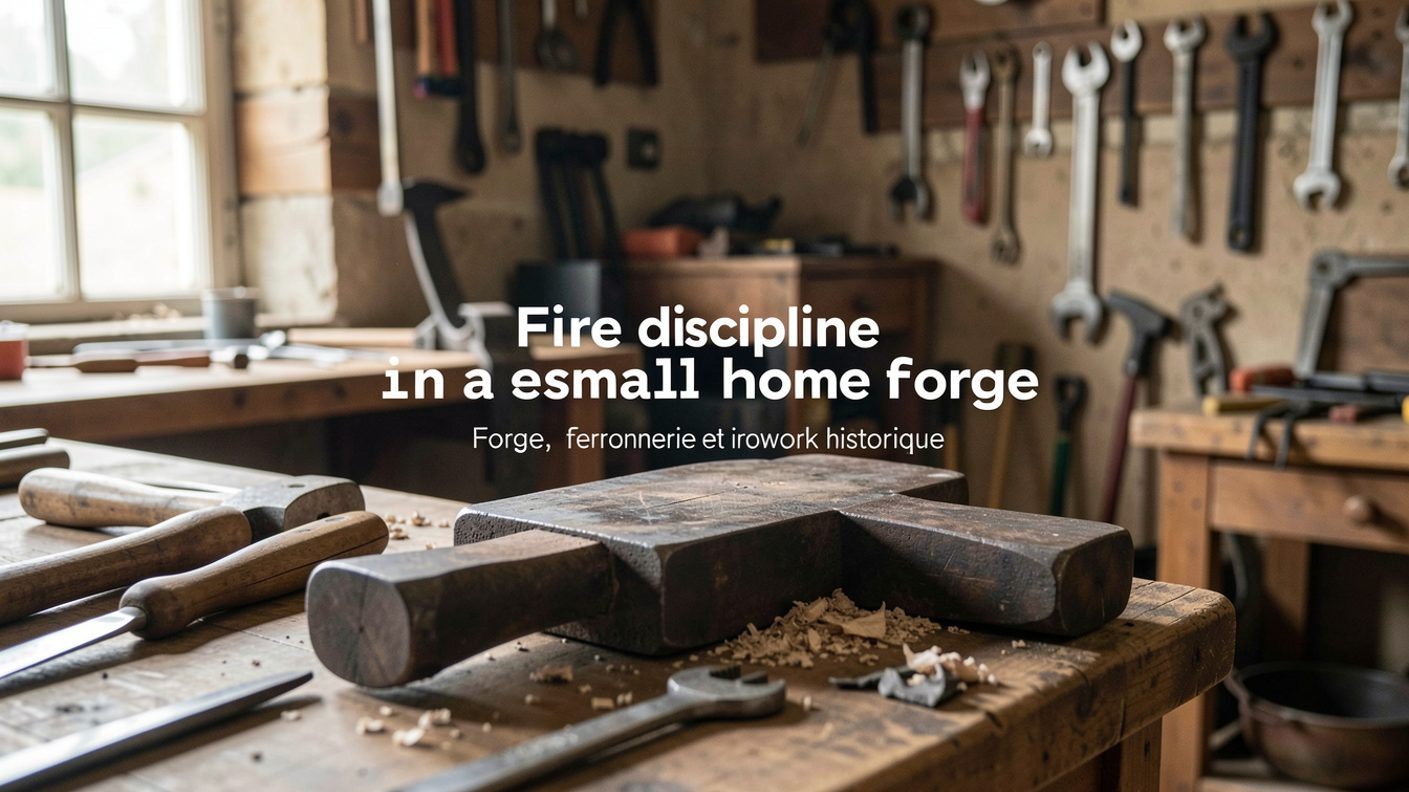
A small home forge runs a naked flame in a building that was not designed for one, and the discipline that makes that safe is settled before the fire is lit. Three decisions carry the whole weight: which extinguisher lives within reach of the hearth, which fires you have agreed in advance not to fight, and what you will do in the first minutes of a contact burn. Everything else, the gloves, the bucket, the clear floor, follows from those three.
Which extinguisher class belongs within reach of a forge?
Extinguishers are classified by the fire they can fight. A forge fire is ordinary combustible material around a solid fuel hearth, the class A territory of wood, paper and cloth, plus whatever the shop holds: class B liquids like finishing oil, and class C risks the moment a wiring fault or a gas forge line is involved. A dry chemical unit rated ABC covers all three and is the usual single answer for a mixed shop; a bucket of water remains the right tool only for quench work and the class A spillover that stays small. The fire extinguisher entry tabulates the classes and their agents in one place.
Placement is the second half of the answer. The extinguisher belongs on the wall between the forge and the door, not on the far side of the flame, because a fire you must reach past is a fire you will not approach. It should be visible, mounted at carrying height, and checked often enough that its gauge is trusted rather than glanced at. A second unit or a hose supply near the exit covers the case where the first judgement was wrong.
Alongside the extinguisher sits the quieter equipment: a clear floor for the three steps between hearth and door, a fixed place for the quench tank so a dropped piece lands in water rather than in shavings, and enough air moving through the shop that fuel gases never get a chance to pool. None of it is dramatic, and that is the point. Fire discipline is mostly the arrangement of a room made weeks before, on a calm day, by someone not yet holding anything hot.
When should you not try to fight a fire yourself?
The decision is made before the event, not during it. A fire is yours to fight only while four conditions all hold: the alarm has been raised, the exit is behind you, the extinguisher matches the class burning, and the fire is still small enough that one discharge can plausibly take it. The Home Fire Watch, a plain-language guide to home fire safety, spells out those same four conditions and the classes in fire extinguisher classes explained, and its version belongs in a forge notebook verbatim.
When any one condition fails, the discipline is to leave. A flame that has reached the rafters, smoke that has banked down to eye level, a burning liquid that is spreading, or a gas line anywhere near the heat: each of those is a closed question, answered by the fire service from outside. The forge is insured or it is not, the quench tank can be refilled, and nothing on the anvil justifies a smoke inhalation injury. The habit worth drilling is boring: lid the fire pot, kill the blower, step out, call it in, and let the building wait.
How do you treat a contact burn while help is on the way?
The forge’s own injury is the contact burn, the hand or forearm laid on metal that looked dead and was not. The first minutes belong to water: cool the burn under running water for a long stretch, commonly given as twenty minutes, and get rings, cuffs and watches off before swelling makes that impossible. No butter, no oil, no ointment on a fresh burn; cooling is the whole treatment while help travels, and anything greasy seals heat in rather than letting it out. Cover the cooled burn loosely with clean material and keep the person warm.
Two thresholds decide whether help is even a question: a burn larger than the person’s own palm, or one that has gone white, charred or numb, is a medical burn and not a workshop burn. The same is true for any burn to the face, the hands’ joints, or a full circle around a limb. Below those thresholds, a small scald is a lesson about hot-looking steel; above them it is a phone call, and the phone call is part of fire discipline too.
None of this is separable from how the forge fire is built in the first place: a fire that stays inside its pot, fed in small amounts and banked deliberately, is the same discipline practiced one step earlier. The extinguisher is the boundary of last resort; the fire you manage well is the one that never reaches it.
A forge fire is fought with the fuel supply, not with water. Close the gas valve or rake the coals apart, then stand back and let the fire spend itself under watch. A dry chemical extinguisher rated for class B and C sits within reach of the door, checked monthly, because a small shop rarely needs more than one. The same logic of placement governs other equipment that runs unattended, and the demands a machine makes on its corner of a shop, from clearance to power to a cleaning routine, are worth reading alongside vending machines at a workplace.
A forge fire is not the only thing that can fail quietly. A small shop that loses power mid-heat leaves a blower stopped, a fire sitting in the pot, and no light to see the work by. The same habit of reading a system before trusting it applies here: know what the generator or battery bank will actually carry, how the transfer switch behaves, and what the controller reports when the load steps up. That is the same discipline as keeping an extinguisher charged and within reach, applied to the supply side. The standby power documentation treats a set dossier the way a smith treats a fire, by reading states, alarms and logs before the day it matters.